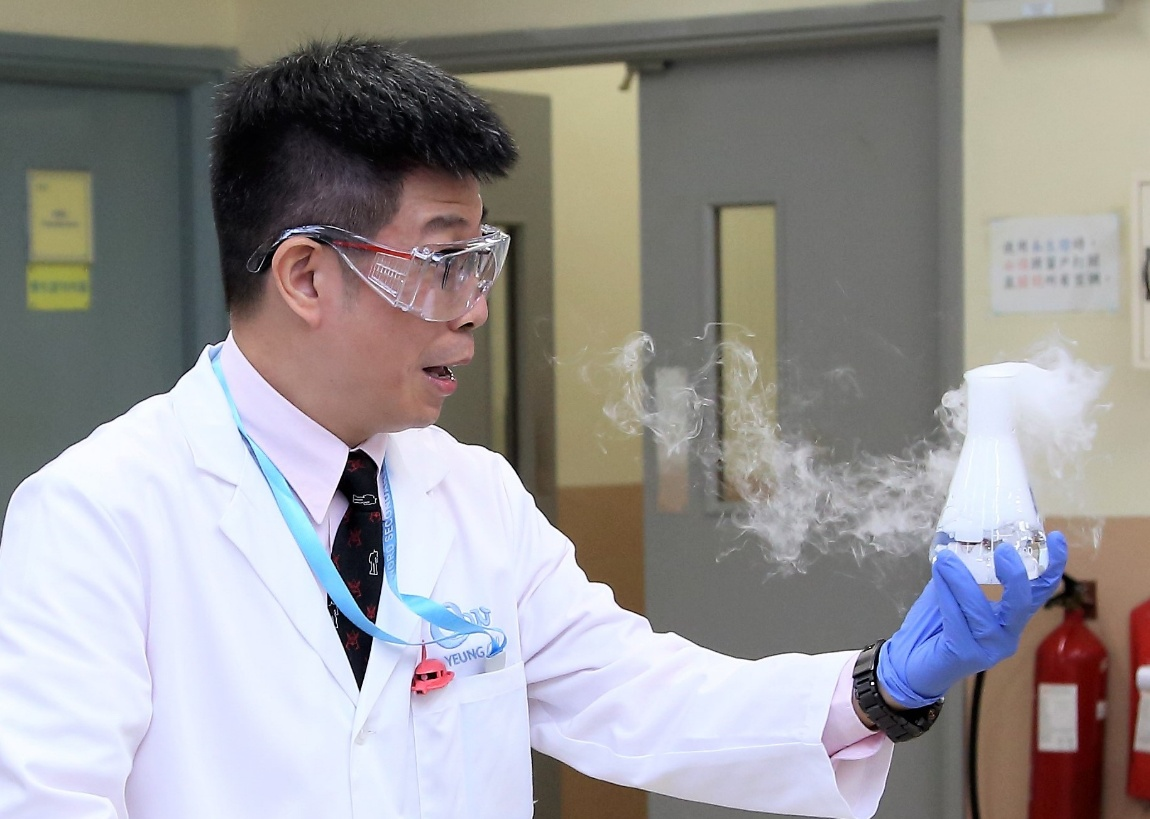
楊仲堯 YEUNG CHUNG YIU, RICHARD (2022/23 Distinction, Dean’s Honour List)
As an experienced secondary school science teacher, I value the significance of STEM education in shaping Hong Kong's future potential. The MA(STEM Ed) program at EdUHK provided me with a well-structured curriculum that focused on essential aspects of STEM education, preparing me to be a knowledgeable and innovative educator who can nurture future STEM professionals.
Advancing Knowledge
Throughout my studies, I gained a comprehensive understanding of fundamental STEM concepts, curricular models, and assessment strategies. Courses like “STEM Education: Theoretical & Curricular Perspectives” and “Curriculum, Teaching & Assessment in STEM” deepened my knowledge while providing conceptual frameworks for developing engaging hands-on pedagogies. The program also facilitated valuable insights through guest lectures by frontline teachers, curriculum leaders, and industry experts, offering a better understanding of the local context and opportunities in STEM implementation and development.
Exploring Innovation
Collaborating with groupmates in the “Scientific Inquiry & Engineering Design” course, we designed a smartphone-assisted pinhole camera through iterative engineering design cycles. We then applied it to measure the sun's diameter using common lab equipment. In the “Developing Creativity & Innovation in STEM” course, we creatively addressed the debate over toothpaste tube squeezing positions between spouses through the design thinking process, proposing a mechanical toothpaste pencil concept that elicited smiles from classmates and professors.
Empowering Competencies
In the “Technology in STEM Education” course, I developed an autonomous drone route design module that aligned with the learning objectives of science, mathematics, and technology education key learning areas (KLAs). In the “Coding & Computational Thinking” course, I critically reflected on my drone-based pedagogical coding design, focusing on the development of computational thinking skills. Subsequently, in the elective “Research Project”, I conducted an empirical study to evaluate the module's impact on the development of 21st-century skills. I applied the statistical techniques learned in the “Principles & Methods in STEM Education Research” course to analyze the quantitative data and revealed a significant improvement in secondary school students' critical thinking and creativity.
I treasure the fruitful and joyful learning through collaborating with supportive classmates and insightful discussions with knowledgeable professors that further enriched my understanding. EdUHK equipped me with various intellectual inputs and practical experiences applying STEM concepts. Most importantly, the network of like-minded educators I forged will surely support my future career and continuous growth.